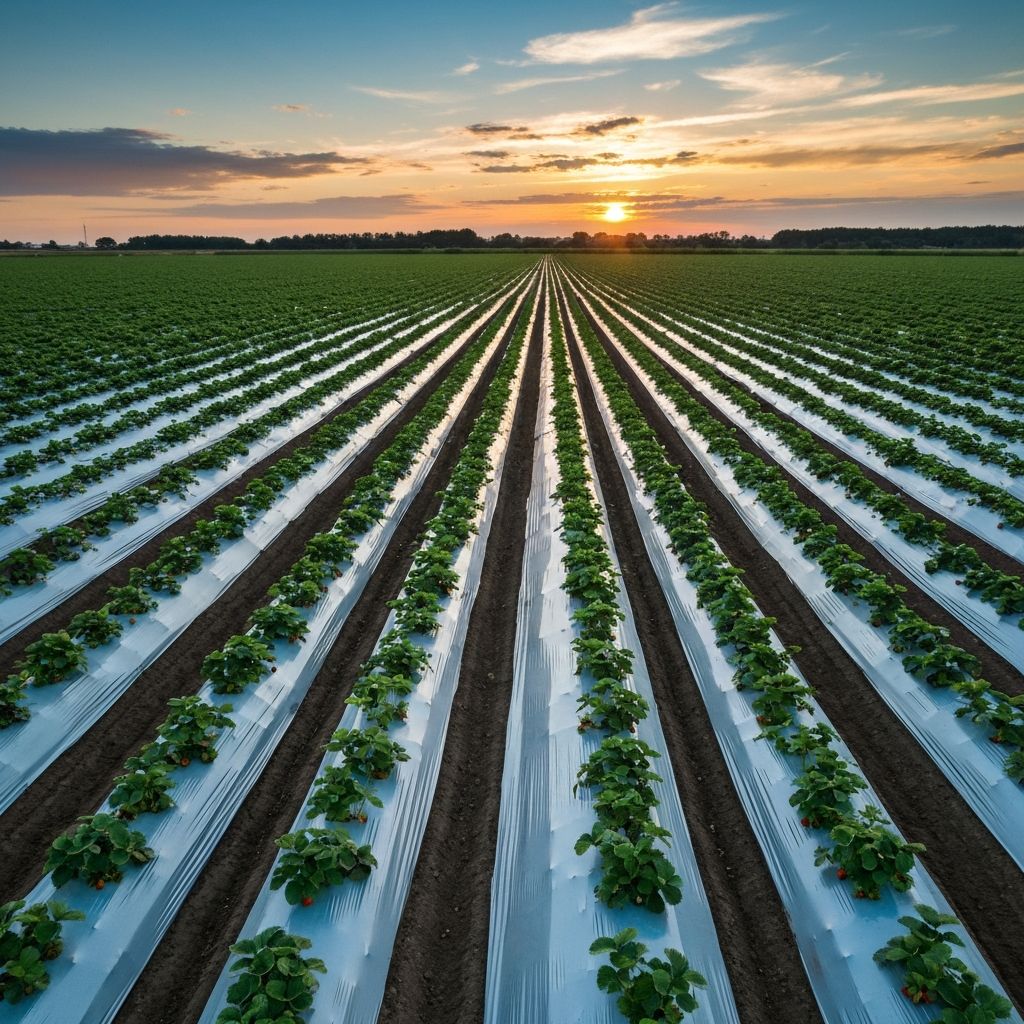
Plastic mulches, combined with drip irrigation, offer growers many benefits for highly-productive horticultural production of fresh fruits and vegetables versus bare ground. These include increased yields, reduced consumption of scarce resources and healthier plants.
Products in this Category
Premium Mulch Film
Can-Grow
Heavy-duty XSB mulch for optimal crop growth and weed suppression.
Learn More
TIF Fumigation Barrier
Can-Block
Totally Impermeable Film maximizing fumigant retention.
Learn MoreCategory Overview
This category includes mulch and fumigation films built for practical field performance, easier handling, and clearer product selection. If you want deeper technical details, open the optional sections below for full breakdowns and context.
Optional Technical Breakdowns
These sections include deeper data for teams who want to compare performance details before purchasing.
Plastic Mulch Benefits (Detailed)
Plastic Mulch Benefits
- 75% less water consumption
- 50% less fertilizer use and leaching
- Reduces weed infestation
- Mitigates weather fluctuations
- Adjusts soil temperature
- Reduces soil compaction and erosion
- Promotes earlier maturing of crops
- Promotes higher quality crops
- Increases crop yields by up to 300%
Soil Disinfestation: What the Data Means
Soil disinfestation is most valuable when control is both effective and practical. Instead of chasing one-time intensity, modern programs prioritize sustained performance in the root zone, cleaner operations, and stronger predictability from bed preparation through harvest.
Fast pesticide loss
Conventional fumigation programs can lose active ingredients too quickly, reducing the control window right where roots need protection.
Uneven field performance
Inconsistent concentration across beds often leads to patchy weed and pathogen suppression and more rework during the season.
Pressure on safety and compliance
Growers need effective disinfestation while meeting strict handling, interval, and environmental requirements.
A Better-Control Approach
Seal and retain
Use high-retention barrier films to keep actives in the bed longer and reduce unnecessary loss to the atmosphere.
Sustain effective concentration
Hold a steadier concentration profile over time so control remains practical across key growth stages.
Support cleaner harvest planning
A more controlled release profile helps teams plan field access and harvest intervals with better confidence.
What Growers Notice
- More predictable weed and soil-borne pathogen control
- Lower active ingredient waste per treated acre
- Reduced field variability across beds
- Better alignment with practical stewardship goals
For teams evaluating options now, this category is built for practical disinfestation performance with clear product paths for mulch and fumigation programs.
XSB Benefits: What the Data Means
XSB films are engineered to reduce unnecessary material weight while keeping practical field performance. The result is a simpler buying decision: choose the film based on your program goal, then move directly to specs.
Can-Grow XSB
For mulch programs focused on weed suppression, moisture retention, and season-long bed performance.
- Supports strong strength-to-weight performance in field use
- Built to help reduce material load while maintaining practical durability
Can-Block XSB / V-TIF
For fumigation programs where high retention and compliance-focused control are top priorities.
- TIF option helps retain fumigants more effectively in the bed
- Supports lower-loss application strategies and cleaner operational planning
Why Buyers Choose XSB
- Thinner XSB films can deliver field performance comparable to thicker conventional films
- Lower plastic use per acre helps reduce input and disposal costs
- Lighter rolls can simplify transport, handling, and bed-change workflows
- Designed for growers who need practical performance without unnecessary material weight